
The Securities and Exchange Board of India (Sebi) has permitted 100 per cent contribution from non-resident Indians (NRIs) and overseas citizens of India (OCIs) in the corpus of foreign portfolio investors (FPIs) based out of Gujarat International Finance Tec-City (GIFT City), the country's international financial services centre (IFSC). However, the Indian diaspora is yet to fully embrace this new route. The regulator allowed this route to enhance the fund ecosystem at GIFT City and attract genuine investments from overseas Indians.

Non-resident Indians (NRIs) haven't gone big on the Indian stock market story despite the post-pandemic boom. While domestic participation through mutual funds (MFs) and dematerialised accounts has soared, NRI participation figures show limited signs of a similar rise.

Equity mutual funds witnessed an inflow of Rs 35,943 crore in November, marking a drop of 14 per cent on a month-on-month basis, amid heightened volatility in stock markets driven by various macroeconomic factors, geopolitical events and US election results. Despite this, it marked the 45th consecutive month of net inflows into equity-oriented funds, reflecting the growing popularity of mutual funds among investors, according to data from the Association of Mutual Funds in India (AMFI) released on Tuesday.

Among the Sensex stocks, Bajaj Finance, Bajaj Finserv, Sun Pharma, IndusInd Bank, Tata Motors, ICICI Bank, Tata Consultancy Services, Hindustan Unilever and Power Grid were the major gainers. NTPC, Axis Bank, Nestle, HCL Technologies and HDFC Bank were the major laggards.

Among the Sensex stocks, Reliance Industries climbed the most by 3.11 per cent. Bajaj Finance, Titan, Axis Bank, ICICI Bank, Bajaj Finserv, IndusInd Bank, UltraTech Cement, Larsen & Toubro, HDFC Bank, HDFC and Kotak Mahindra Bank were among the other major winners. Power Grid, Hindustan Unilever, Tech Mahindra, Tata Consultancy Services, Infosys and Asian Paints were among the biggest laggards.

Among the Sensex firms, Power Grid, UltraTech Cement, Titan, Reliance Industries, Bajaj Finance, Mahindra & Mahindra, ICICI Bank, Tata Consultancy Services, Tech Mahindra, ITC and HDFC Bank were the major laggards. HCL Technologies, IndusInd Bank, Wipro, Nestle, Maruti, Larsen & Toubro and Asian Paints were among the gainers.

HCL Tech, State Bank of India, Infosys, Tech Mahindra, Tata Consultancy Services, Bajaj Finserv, Larsen & Toubro, Mahindra & Mahindra and Titan were also among the losers in the Sensex pack. Eternal, Hindustan Unilever, Asian Paints, ITC, Tata Motors and NTPC were among the gainers.

Stock markets will be largely driven by global trends and macroeconomic data announcements in a holiday-shortened week which may see volatility amid monthly derivatives expiry, say analysts. Equity markets will remain closed on Monday for Gurunanak Jayanti. Trading activity of foreign investors and the movement of the rupee against the dollar will also be tracked by investors.

Top gainers in the Sensex pack included HCL Tech, Tata Motors, M&M, Bajaj Auto, RIL, Hero MotoCorp, Yes Bank, Maruti, HDFC Bank and Bajaj Finance, which surged up to 6.43 per cent.

Fundraising momentum is expected to accelerate further in the New Year, potentially surpassing 2024's record figures

Mutual funds (MFs) turned net sellers of equities in April amid a run up in stock prices on sustained inflows from foreign portfolio investors (FPI). The benchmark indices, Sensex and Nifty50, logged their biggest monthly advance since November last year, gaining 3.6 per cent and 4.1 per cent last month. Data from the Securities and Exchange Board of India (Sebi) shows that MFs sold equities worth over Rs 5,100 crore in April, the highest since February 2021.

Banks are set to make treasury gains in the fourth quarter of the current financial year (2024-25) as the yield on government bonds has softened so far this quarter, driven by strong inflows into the debt segment, market participants said. The yield on the 10-year benchmark government bond fell 8 basis points (bps) in the previous week - the steepest weekly decline in four months, since November 30, 2024 - to settle at 6.62 per cent.

Shares reserved for Qualified Institutional Buyers (QIB), including banks and mutual funds in the LIC's public offer were subscribed fully on Monday morning, taking the overall subscription of the issue to a little over 2 times. Against 3,95,31,236 reserved, 4,61,62,185 bids were received, reflecting a subscription of 1.17 times, according to data posted on stock exchanges at 12:12 pm. Non institutional investors' portion was subscribed 1.38 times.

They don't just want better returns -- they're looking for global opportunities, more variety and smarter ways to grow their money, says Soubho Moulik, CEO, Appreciate.

Investors should avoid making drastic changes to their asset allocation during a market correction.

Among the Sensex shares, Infosys rose the most by 1.37 per cent, followed by Larsen & Toubro (0.90 per cent), and Wipro (0.83 per cent). HDFC Bank, ICICI Bank, Reliance Industries, ITC, TCS, Kotak Bank, Asian Paints and Titan were among the lead gainers.

Investors who play follow-the-leader and invest wherever the Foreign Portfolio Investors are going may face painful losses.

The Indian rupee is likely to depreciate further against the US dollar through the end of 2024. This is due to the continued strengthening of the greenback, combined with the weakening of the Chinese yuan, which is expected to keep pressure on the Indian currency.


In the Sensex pack, Mahindra & Mahindra, Tata Steel, Tata Motors, Maruti, Larsen & Toubro, HDFC, HDFC Bank, Tech Mahindra and Bharti Airtel were the major laggards. Asian Paints, Bajaj Finserv, Power Grid, Reliance Industries, NTPC and UltraTech Cement were among the gainers.

Reminiscent of the past two years, the market has made positive strides ahead of the Union Budget 2023-24 (FY24). The benchmark National Stock Exchange Nifty has gained 1.8 per cent in the last month. Typically, markets tend to gain ahead of the Budget as investors build in optimism.

From the Sensex pack, Maruti, Axis Bank, Tata Consultancy Services, Nestle, Infosys, Mahindra & Mahindra, Tech Mahindra and Bharti Airtel were the major laggards. Power Grid, Sun Pharma, HCL Technologies, Larsen & Toubro and UltraTech Cement were the gainers.

Foreign portfolio investors' (FPIs') shareholding in NSE-listed companies fell 51 basis points sequentially to 17.68 per cent in the quarter ended March 31, 2024, according to data compiled by PRIME Database. This is the lowest FPI shareholding since December 2012. From the recent peak of 21.21 per cent at the end of December 2020, FPI shareholding is down 353 basis points.

Under Sebi guidelines, AIFs can operate broadly in three categories.

After declining for three consecutive quarters, the value of FPI investment in Indian equities rose 8 per cent quarter-on-quarter to $566 billion in the July-September period, according to a Morningstar report on Wednesday. A fast-changing global macroeconomic landscape, sentiments and opportunities that the Indian equity markets have to offer impacted the direction of flows by Foreign Portfolio Investors (FPIs). Through the quarter, the value of the FPI holdings in domestic equities surged by 8 per cent to $566 billion from $523 billion recorded in the previous quarter.

Domestic institutional investors pumped Rs 2.3 trillion into equities during H1 CY24. Of this, mutual funds contributed 80%.

Titan, HCL Tech and State Bank of India were also among the laggards. However, Hindustan Unilever, Asian Paints, ICICI Bank, Power Grid, HDFC Bank and ITC were the gainers.

Benchmark equity indices continued their record-shattering spree on Tuesday, with the Sensex and Nifty hitting their fresh all-time high levels in early trade, amid persistent foreign fund inflows. Also, buying in Bajaj Finance, Bajaj Finserv, Tata Consultancy Services and HDFC twins added to the positive market momentum. Rallying for the fifth straight session, the 30-share BSE Sensex jumped 381.55 points to hit its all-time peak of 65,586.60 in early trade.

The rupee depreciated by 22 paise to close at a fresh lifetime low of 79.48 (provisional) against the US dollar on Monday, tracking a strong greenback overseas and subdued domestic equities. However, receding crude oil prices in the international market restricted the rupee's loss, forex traders said. At the interbank forex market, the local unit opened weak at 79.30 against the greenback and witnessed an intra-day high of 79.24 and a low of 79.49.

Among Sensex gainers, Power Grid jumped the most by 4.16 per cent after its board approved an investment of Rs 656 crore in transmission projects. Private lenders HDFC Bank, Axis Bank, Kotak Bank, IndusInd Bank and ICICI Bank were also among lead gainers. NTPC, Nestle and Hindustan Unilever also ended the session with gains.

A lot of gains have been driven by foreign portfolio investors. Lower interest rates globally have forced foreign investors to seek avenues for growth. They have been net buyers to the tune of Rs 2.5 trillion over the trailing 12 months, including May, reports Sachin P Mampatta.

The Sensex and Nifty ended at fresh lifetime peaks on Tuesday amid a largely firm trend in other Asian markets and continuous foreign fund inflows. The 30-share BSE Sensex gained 177.04 points or 0.28 per cent to settle at 62,681.84, its fresh record closing high. During the day, it jumped 382.6 points or 0.61 per cent to its lifetime intra-day peak of 62,887.40.

Revenue dept says changes in I-T Act require Parliament nod; new regime to wait till Budget in June-July 2014.

'Challenge is basically near-term growth as the outlook has turned a bit adverse.'

Draft Red Herring Prospectus (DRHP) filing continued to be robust in October, signifying the optimism in the initial public offer (IPO) market despite the recent turbulence in equities. In October, 17 companies filed their offer documents for IPOs. The rush in filings has made August-October 2023 the best three-month period for DRHP filings since July-September 2021.

Market participants attributed the robust inflows to positive investor sentiment

An analysis by the Securities and Exchange Board of India (Sebi) has revealed that retail traders remain at the wrong end of the stick when it comes to equity derivatives trading. About 93 per cent of them incurred an average loss of Rs 2 lakh (per trader) during the last three financial years. The new report highlights an increase in the loss-making individual investors in futures and options (F&O) to 91.1 per cent in FY24 compared to 89 per cent in FY22.

The S&P BSE Sensex gained 57 points to end at 26,064.

'More than investors, fund houses, and advisors have raised caution and limited flows on small-and mid-caps.'
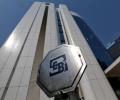
Securities and Exchange Board of India (Sebi) chairman Ajay Tyagi on Thursday defended the recent reforms announced by the regulator, such as peak margin norms and shortening of the trade settlement cycle, saying they were in the interest of investors. The moves were criticised by the broking community and the foreign portfolio investors (FPIs). Speaking to the media after his inaugural address at the CII Financial Markets Summit, Tyagi said: "The new peak margin norms are in everyone's interest.
